
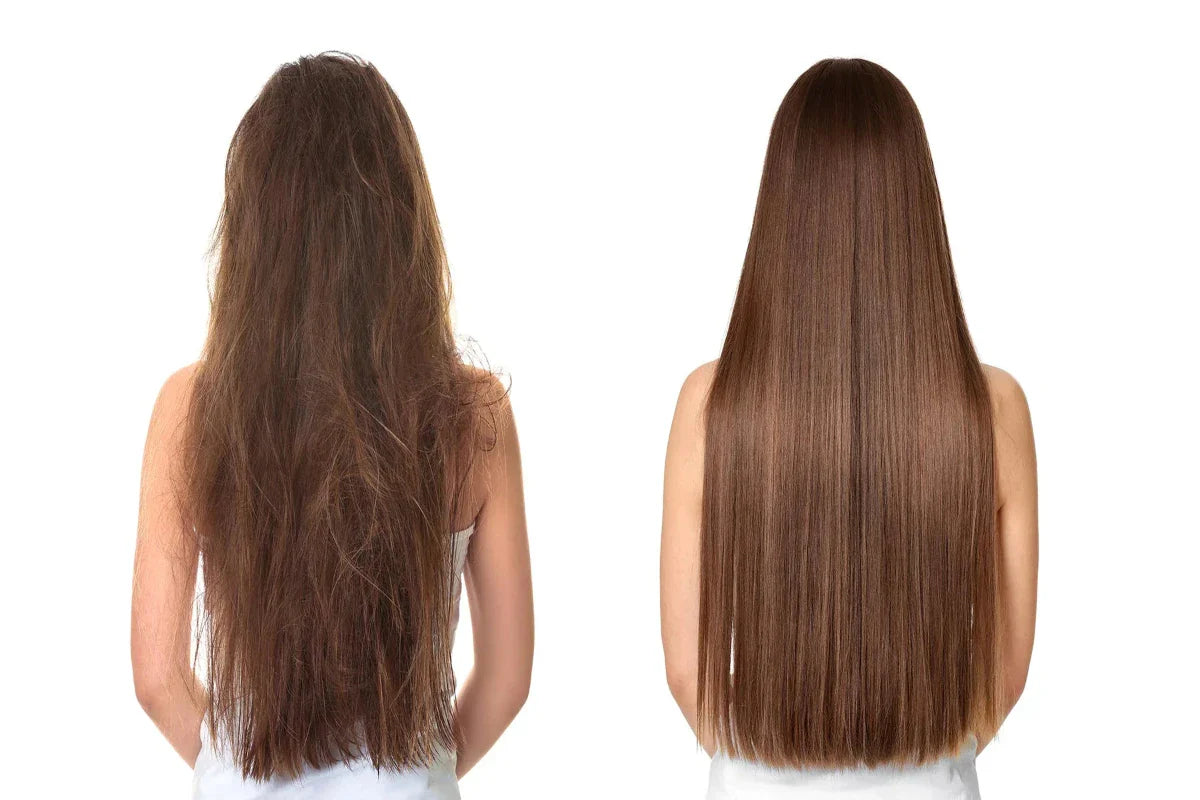
Chemically damaged hair is one of the most common problems our stylists see. Bleach, color, perms, relaxers and smoothing treatments all change the structure of the hair, and when they are overdone or overlapped, hair turns dry, rough and fragile. The good news: damaged hair is not dead hair. You cannot undo the damage inside the strand, but the right routine makes it look and feel far healthier while the damaged lengths grow out. Here is how to recognize chemical damage, what causes it, and how to care for it.
What Does Chemically Damaged Hair Look Like?
Chemically damaged hair usually shows several of these signs:
- It feels rough, dry or straw-like, even right after conditioning.
- It stretches and feels gummy or mushy when wet, then snaps. This is overprocessed hair, often called chemically burnt hair.
- It breaks off along the mid-lengths, not just at the ends.
- It tangles easily and looks frizzy or fuzzy, even on a dry day.
- Color grabs unevenly and fades quickly.
- It will not hold a style, a curl or a blowout.
Can Chemically Damaged Hair Be Repaired?
Hair is not living tissue, so it cannot heal itself. What you can do is protect the hair you have: gentle cleansing, regular conditioning and weekly masks, leave-in treatments that smooth the cuticle, less heat, and regular trims. Together they make damaged hair softer, shinier and stronger-feeling, and they stop the damage from spreading. Hair that feels gummy when wet is usually too far gone and needs to be cut off as it grows out. Either way, see a professional before your next chemical service.
Below is our quick guide to the main types of hair damage and how to care for each one.
What is hair damage?
Hair damage is a term that usually refers to the damage of the hair that happens on the outer layer of the hair or the hair cuticle. When damaged, the hair cuticle opens and makes the hair shaft prone to even more damage. When the hair is damaged, it can look and feel frizzy, dry, tangled, brittle, unmanageable, rough, etc.
Let's get deeper into the types of hair damage.
Dry and Dull Hair
Dry and dull hair is damaged hair that lacks natural oils on the outer layer of the hair. That is what makes the hair lose its shine. One thing that can lead to the hair looking like this is washing it with shampoos that contain harsh chemicals. These chemicals can strip the natural oils from the scalp and the hair. A good starting point to prevent such further damage is to wash the hair less often and to use shampoos that are suitable precisely for the right hair type.
Tangles
When the hair is damaged, it is prone to tangles. That is because the raised cuticles create friction between the hair strands and cause them to get intertwined. The situation can become worse with the lack of moisture. When the hair is all in tangles, it is best to brush it with a wide-toothed comb. Start at the bottom and go up. Products like detangling, sprays, oils, conditioners, and masks will help with the problem.

Frizz
Frizz happens when the cuticle does not lay flat. It can appear on the surface, crown, top of the hair, or at the ends. Most commonly, frizz happens and is more accentuated during the wintertime. Also, the humidity and the damaged hair itself can cause frizz to happen. It is an uncomfortable situation, but some serums help in taming the frizz.
A great product to help you tame frizz is Amatora OQ Leave-in Treatment Mousse.
Brittleness and Breakage
Split ends are one of the most common looks of damaged hair. They happen when the hair strands split into two. That means that the hair is also prone to breakage. A split end cannot be glued back together, so the only real fix is a trim; serums and conditioners smooth the look of the ends and help protect them from splitting further. Try The Trust TS Treatment.

What causes hair damage?
Heat damage, chemical damage, and physical damage are the most common and frequent issues. These types of hair damage and many more occur frequently and regularly, depending on the hair type and lifestyle you lead. But overall, three types of hair damage cause all of the things mentioned earlier. Each one needs to be identified correctly so it can be treated in the right way.
Heat Damage
One of the most common and usual ways of hair damage is heat damage. As the name suggests, the hair damage of the hair comes when the hair experiences excessive heat, which damages it. Hairstyling is the first thing that makes the hair damaged. Any form of heat damages the hair, and the styling hair heat tools damage the hair excessively. Blow drying, flat ironing, curling are all processes in hair styling that dry and damage the hair. They work in high temperatures and damage the hair. That is why even the sun and too much heat exposure during the summer can damage the hair. The hair will experience burns that are impossible to rescue and revive.
Repairing heat damage is quite a complex and challenging thing. As mentioned above, excessive hair burns are impossible to save. If some part of the hair feels extra-dry and feels like cardboard in your hand, then it is burned to the point of no return. However, the other parts of the hair can be saved and repaired.
The first thing you need to start doing to your dry and heat-damaged hair is to reduce the application of heat. That means, limit the use of the styling appliances to a minimum. Additionally, stay away from the critical areas that are highly damaged. You do not want to apply any more heat and make it a complete burn. Next comes the regular and proper hair routine for damaged hair. That means incorporating deep conditioning instead of a standard conditioner that will boost and nourish the hair. When the hair is heat damaged, regular trimming is essential to prevent a further spread of the burned hair. It would be best if you started trimming the damaged hair every six weeks until it grows out. Not only is that healthier for the hair, but it also looks more beautiful and natural.

Pro Tip
The regular hair routine requires heat styling, especially if you are going to work and look neat and proper. As you will try to avoid heat styling tools as much as possible, be sure to use heat protectant products. Usually, these products come in the form of spray or cream, and they should be applied every time before styling.
You will instantly see excellent results by applying a heat protectant every time before you style. Browse our hair treatment collection to find one for your hair.
Chemical Damage
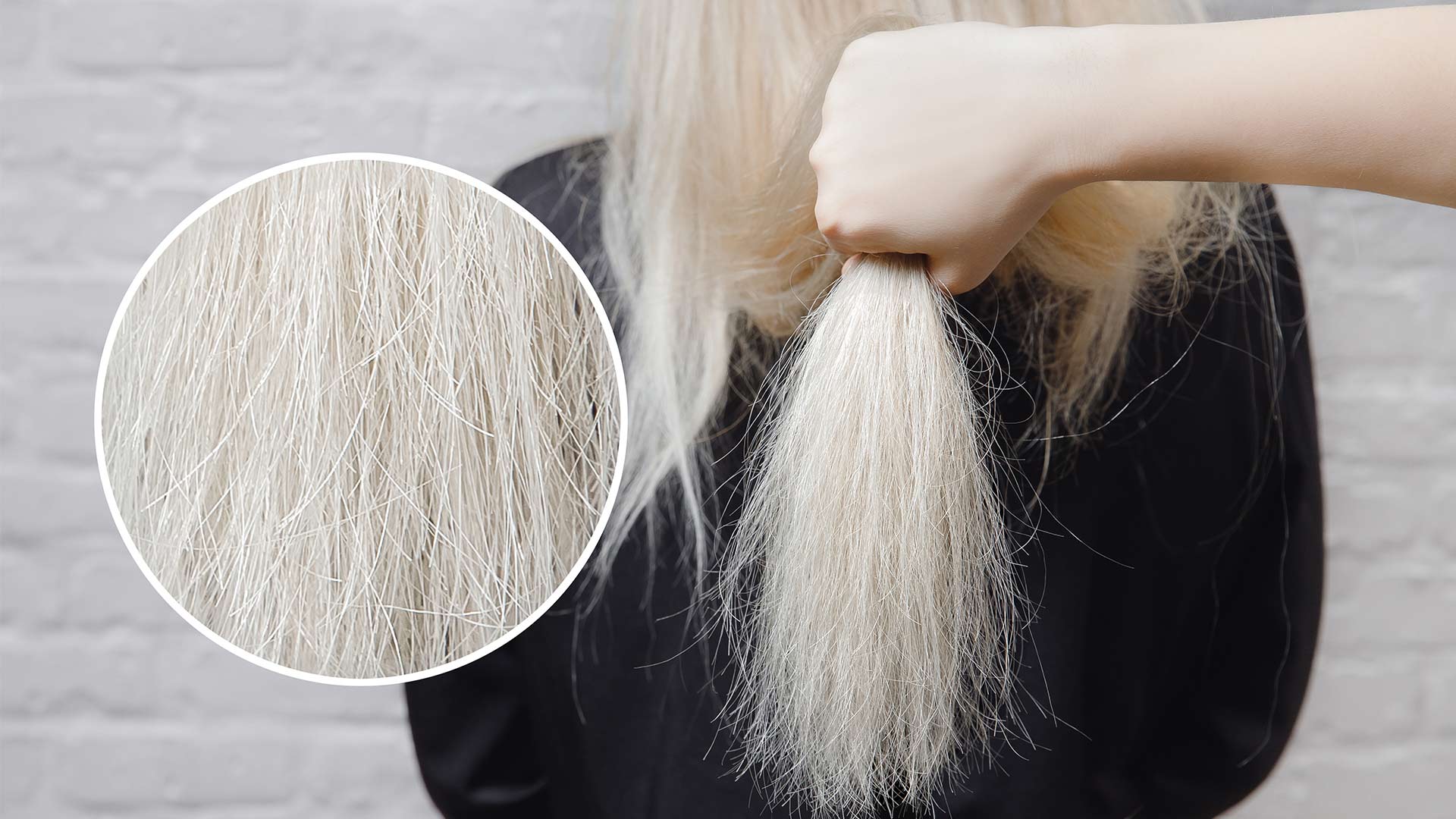
Chemical damage happens when color, bleach (lightener), perms, relaxers or smoothing treatments break down the hair's structure. Lightener is the harshest: it lifts the cuticle and breaks down the internal bonds that give hair its strength and elasticity. Damage builds up when services are overlapped on hair that has already been processed, when lightener is left on too long, or when services are done too close together.
Before any chemical service, hair should be in good condition: elastic and well hydrated. A good colorist will ask about your hair's history, check its elasticity, and may suggest a strand test first.
How to care for chemically damaged hair:
- Use a gentle shampoo and massage it into the scalp rather than scrubbing the lengths.
- Condition after every wash and use a rich hair mask once a week.
- Apply a leave-in treatment or oil to the mid-lengths and ends to reduce friction and frizz.
- Keep heat styling to a minimum and always use a heat protectant.
- Space out chemical services, and ask your stylist to apply color or lightener to new growth only, not over lengths that are already processed.
- Trim regularly so damaged ends do not split further up the strand.
Pro Tip
Chemical services can leave hair dehydrated, dull and dry, sometimes almost broom-like. That is why at-home care matters so much: a weekly deep-conditioning mask is the single most effective habit for keeping chemically treated hair soft and manageable.
Physical Damage
Physical hair damage is a type of damage that happens when the outer cuticle of the layer of the hair is compromised. This damage can occur from the friction coming from wrong styling hair tools, sleeping on harsh fabrics, and brushing the hair roughly. All of that contributes to small rips and tears that can happen to the hair. When the hair splits, that split can continue to go upwards. That's why regular trimming prevents further damage to the hair from split ends. With the physical hair damage, the hair looks dull and dry.
Preventing hair damage is possible by incorporating specific steps in the regular hair routine and hair maintenance. For example, start using soft elastic hair bands for braiding the hair or tying up in a pony or a bun. The rubber bands are not suitable for the hair, as they can cause more frequent breakage. Another way to prevent physical hair damage is to start using hair oils. These oils should become part of a night hair routine. Apply the oils to the hair as a deep conditioning overnight treatment. That will make the hair feel softer and shinier. Also, trimming the hair every 6-8 weeks is a great way to prevent further hair damage. That is the best way to eliminate physical hair damage.
Pro Tip
Always follow the regular washing hair routine by using a leave-in conditioner. When applying the leave-in-conditioner, always use a brush and comb the hair, which will detangle the hair.
For a deeper weekly treatment, the collagen-rich Amatora QUO ColamasQ mask nourishes and hydrates damaged hair.
How to control and prevent hair damage?
Preventing and controlling hair damage starts from having a regular and good at-home hair practice. These valuable tips will help you set a routine and keep your hair in the best possible condition:
- Don't rub shampoo on hair strands. Gently massage in on the scalp and let it run through the rest of the hair;
- Don't use too much shampoo to create foam because it leads to dryness of the hair;
- After washing, wrap the hair in a soft cotton T-shirt that will absorb the water. Let it air dry, if possible;
- Don't brush and comb the hair when it is wet. Wet hair is more prone to damage and breakage;
- When going to bed, never wrap the hair in a tight pony or bun;
- Try and limit the heat hair styling. Also, dyeing and bleaching should be done with a specific time apart between appointments.

With the right and proper use of suitable shampoos and conditioners, you will get your hair in control and achieve great results. Take a look at the wide range of hair products at Kija Hair Salon and find the ones that will best suit your needs.
Products to Try for Chemically Damaged Hair
- Shampoo: Amatora QUO Hair Bath, a silicone-free keratin shampoo made for color-treated hair.
- Conditioner: Amatora QUO KitomasQ, with fulvic acid and hematin to smooth the hair and help maintain color.
- Weekly mask: Amatora QUO ColamasQ, a collagen-rich mask designed to help rebalance hair after a perm or color service.
- Deep mask: Margaret Josefin Deep Hair Mask, with marine collagen and hyaluronic acid for very dry hair.
- Leave-in essence: Margaret Josefin Intensive Hair Care Essence, a lightweight, non-greasy essence with marine collagen and amino acids.
- Leave-in oil: MUCOTA CS+DD Oil Treatment, a light Japanese oil for damaged or color-treated hair that smooths frizz without weighing hair down.
- Leave-in foam: Amatora OQ Leave-in Treatment Mousse, a treatment foam that tames frizz and adds gloss.
Get a Professional Opinion
If your hair feels gummy when wet or is breaking off, see a stylist before your next color or smoothing service. The independent stylists at Kija Hair Salon in Irvine can assess the damage, trim what cannot be saved, and plan color or keratin services that will not make it worse. See our salon services, or shop hair treatments. Orders over $40 ship free.